
 By
By 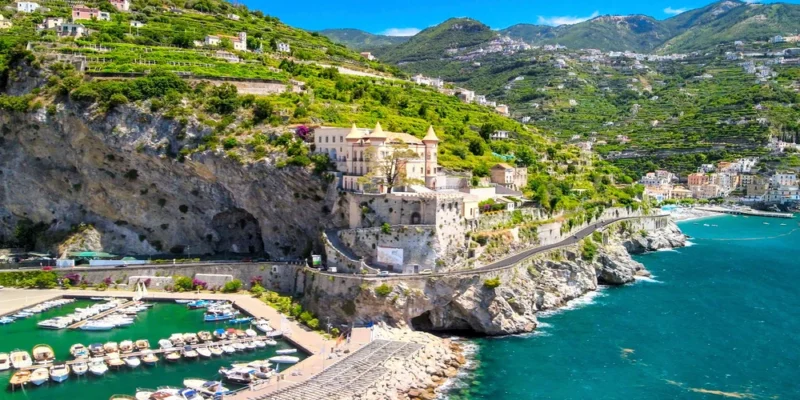
The Amalfi Coast has a marketing problem it never asked for: it’s become so photogenic, so endlessly reposted, that it now attracts more visitors than its narrow cliffside roads and small-town infrastructure were ever built to handle. Positano’s population is roughly 4,000 people, and on a peak summer day it can absorb tens of thousands of visitors. That doesn’t mean the coast isn’t worth seeing – it absolutely is – but seeing it well takes some strategy. Here’s how to experience the Amalfi Coast without spending your entire trip stuck behind a tour bus.
Understand Why It Gets So Crowded
The Amalfi Coast’s traffic problem isn’t really about the volume of tourists in some abstract sense – it’s about geography. The entire coastline runs along a single, narrow, winding road (the SS163) carved into cliffside rock in the 1800s, long before anyone anticipated modern tourism. There’s essentially one road in and out of most towns, which means even a moderate number of cars, buses, and scooters can create gridlock. Understanding this bottleneck is the first step to avoiding it, because most of the “crowd problem” tourists complain about is really a traffic and timing problem.
Go in Shoulder Season
The single most effective way to avoid the worst of the Amalfi Coast crowds is timing. Late May to mid-June, and September through early October, offer warm weather and swimmable water without the July and August crush, when Italian and European domestic tourists join international visitors en masse. Shoulder season also means restaurants aren’t fully booked out weeks in advance, and you can actually get a table with a view without a reservation made months earlier.
Base Yourself Somewhere Quieter
Positano and Amalfi town get the lion’s share of attention and, as a result, the lion’s share of congestion. Basing yourself in a quieter nearby town – Praiano, Minori, or Cetara – puts you close enough to visit the famous spots for a few hours while giving you a peaceful home base for the rest of the day. These towns tend to have their own charm anyway: Cetara, for instance, is a working fishing village known for its anchovy-based cuisine, largely untouched by the tourist infrastructure that’s reshaped Positano’s waterfront.
Take the Ferry, Not the Road
Given the single-road bottleneck problem, one of the best-kept secrets of the Amalfi Coast is that many towns are connected by regular ferry service along the coastline. Traveling by boat between Amalfi, Positano, and Sorrento not only skips the traffic entirely, it gives you a completely different vantage point on the cliffside towns – one that arguably shows them off better than the road ever could. It’s faster, often cheaper than a private driver, and turns transit time into part of the experience rather than a source of stress.
This is also part of why sea-based travel through the region has become such a popular way to experience the Amalfi Coast in the first place. Rather than fighting for a hotel room in an oversubscribed town, visiting the coast as a stop on a broader trip through the region means you get a day of exploring at your own pace, without needing to solve the logistics of where to sleep in a town that’s already at capacity.
Visit the Less-Famous Towns
Positano and Amalfi aren’t the only worthwhile stops. Ravello, perched higher up the cliffs, offers some of the best panoramic views on the entire coast and a fraction of the foot traffic, partly because it requires a short uphill detour most day-trippers skip. Its Villa Cimbrone gardens and cliffside terrace are consistently ranked among the most scenic (and least crowded) viewpoints in the region. Furore, a tiny town built into a fjord-like gorge, is another overlooked stop that most itineraries bypass entirely.
Time Your Day Trips Strategically
If you’re day-tripping into Positano or Amalfi from elsewhere, arrive as early as possible – ideally before 9:30am – and plan to leave by early afternoon, before the day-tripper crowds from Naples and Sorrento peak. The light is also better for photos in the morning, before the midday sun flattens the coastline’s dramatic shadows. Evenings can work too, once the day-trip crowds clear out, leaving the towns to overnight guests and a noticeably calmer atmosphere.
Skip the Car Entirely
Renting a car to drive the Amalfi Coast sounds appealing in theory and is often miserable in practice. Parking is scarce and expensive, the road is narrow enough that passing buses require genuine nerve, and traffic jams during peak hours can turn a 20-minute drive into a two-hour one. Between the ferries mentioned above, local buses, and hired drivers who know the road intimately, there’s rarely a good reason to self-drive this particular stretch of coastline.
A Coast Worth the Effort
None of this is meant to talk anyone out of visiting – the Amalfi Coast earns its reputation. Cliffside towns spilling down toward turquoise water, lemon groves clinging to impossibly steep terraces, and some of the best coastal cuisine in Italy make it worth the extra planning. Travelers who research shoulder-season timing using month-by-month regional weather and crowd guidance before booking often find they can enjoy the same views everyone else fights for, just without the fight.
The lesson, more than anything, is that the Amalfi Coast rewards a bit of strategy. Go at the right time, base yourself slightly off the main circuit, and let ferries do the work that cars were never built to do here – and the crowds that define most people’s Amalfi Coast stories become a footnote instead of the headline.





Comments